Month: May 2016

  • Hate crime laws and police

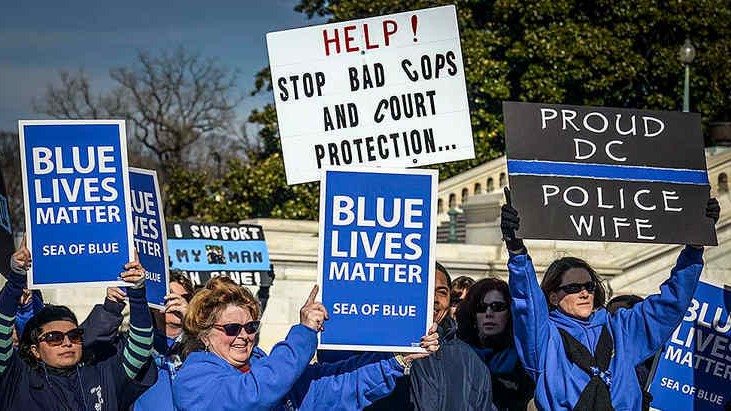
    dc-police-rally

    Hate crime laws are usually intended to escalate punishments levied against people who commit crimes against protected classes of persons because of the target’s membership in a particular group or category of people. The establishment of protected classes usually aims to prevent discrimination against sociopolitically marginalized groups along lines of race, sex, religion, sexual orientation, or other more “intrinsic” traits (let’s leave aside problems with that idea of “intrinsic” for now). Louisiana just enacted a law that includes police (firefighters and paramedics were tacked on, but clearly not the primary targets) as part of a protected class of persons in hate crime law; a piece of “Blue Lives Matter” legislation. This law will be mirrored in other states. The bill supporters argue that this will help counter-balance a supposed “anti-police prejudice” that is making the lives of police especially dangerous. This kind of rationalization is little more than a form of authoritarian gas-lighting that obfuscates substantive and serious grievances people (especially more vulnerable people) have against the violence and political obstacles systematically produced and defended by police as an institution.

    (more…)
  • Concepts of Note: What is Herrenvolk democracy?

    Concepts of Note: What is Herrenvolk democracy?

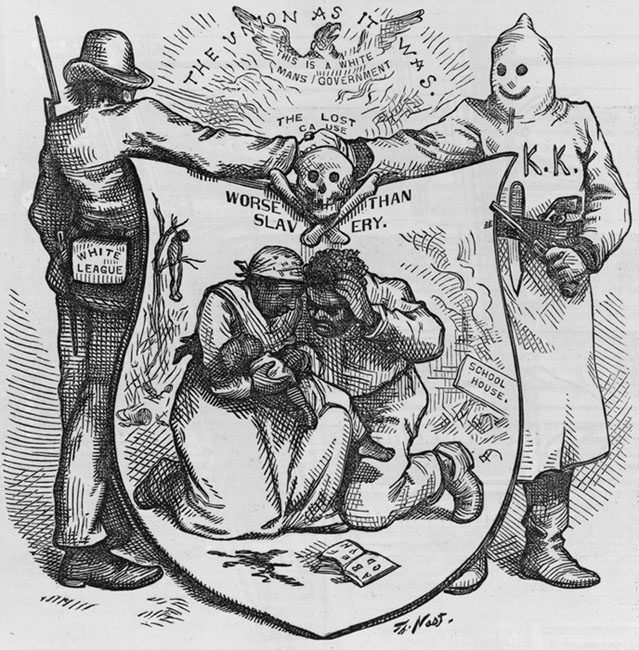
    white league (2)

    [[ The purpose of Concepts of Note entries is to provide summaries and reflections on important concepts in political theory, social science, and the humanities ]]

    Herrenvolk democracy” is a crucial concept for understanding the potential racial dimension of democratic belonging and exclusion within a political body, as well as the inequalities of power, rights, and resources that follow. Coined by Pierre van den Berghe, a Herrenvolk democracy is a political order that is “democratic for the master race but tyrannical for subordinate groups” (p.18). There is equality, but only within the dominant racial group. Most importantly, the sociopolitical equality enjoyed within the dominant racial group is premised upon rather than in contradiction with the inequality that sustains the order as a whole. The idea that this should be considered a “real” form of democracy at all may sound strange or appear hypocritical on its face, especially to contemporary citizens of liberal democracies. The fierce international criticisms and boycotts of the apartheid regime in South Africa (where whites ruled, and people of color were disenfranchised, segregated, and stripped of citizenship) during the second half of the 20th century exemplifies this sense of its illegitimacy. Yet, the apparent contradiction of Herrenvolk democracy is something that was fought for and achieved, rather than being transhistorically obvious to all.

    (more…)